Movement & Breath
Yoga
Yoga is a centuries-old practice from India that weaves together physical postures, breath and quiet attention to build strength, ease and a steadier mind.
What it is
Yoga originated on the Indian subcontinent thousands of years ago and is described in classical texts such as Patanjali's Yoga Sutras. The Sanskrit word yoga carries the sense of 'union' or 'yoking', pointing to its original aim of bringing body, breath and mind into harmony. What most people meet today is largely the physical limb of a much wider tradition — the postures, or asanas — practised alongside breathwork and periods of stillness.
Many styles have grown from these roots. Hatha is slow and foundational; Vinyasa flows with the breath; Iyengar emphasises precise alignment, often with props; Yin holds gentle postures for longer; and restorative yoga is deeply relaxing. Yoga is best understood as a movement and wellbeing practice that supports physical and mental ease. It complements, rather than replaces, medical care for any diagnosed condition.
What to expect in a session
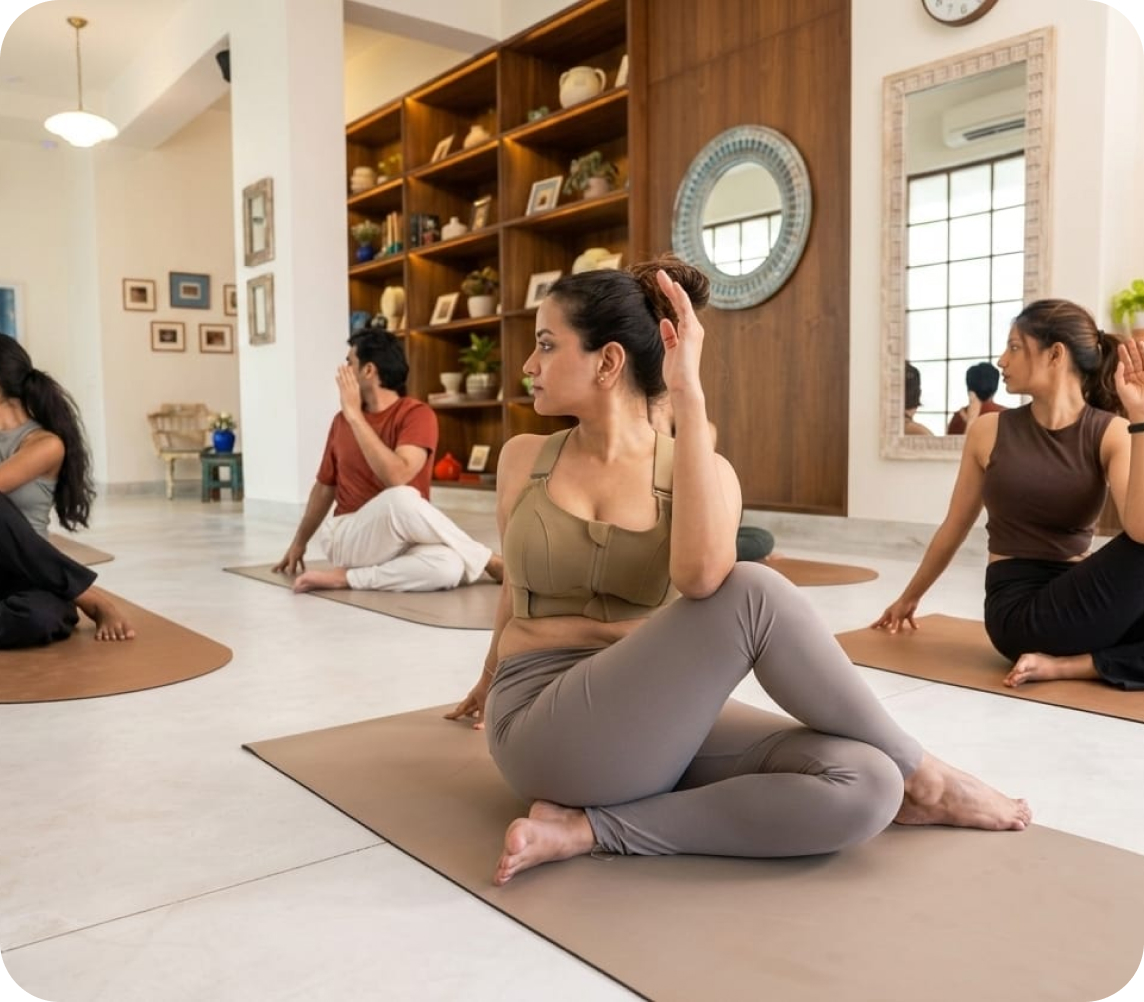
In a typical class you work on a mat, usually barefoot, in comfortable clothing you can move in. A teacher guides you through a sequence of postures linked to the breath — standing poses, gentle twists, forward folds and balances — often beginning with a settling and ending with a few minutes of rest lying down. Good teachers offer modifications so each posture can be adapted to your body, and you are always free to pause. Sessions commonly run forty-five to ninety minutes. You need no special flexibility to begin; the practice meets you where you are and develops over time.
Who it helps
People take up yoga to build strength and flexibility, ease everyday stiffness, sleep better, and find a calmer relationship with a busy mind. It suits a wide range of ages and abilities, with gentle and chair-based forms available for those who need them. Many find a regular practice a grounding part of their week. Yoga complements, and does not replace, professional medical care: if you are pregnant, recovering from injury or surgery, or living with a health condition, tell your teacher and check with your doctor so the practice can be adapted safely.
More than postures
While classes often centre on the physical poses, traditional yoga is a broader path that also includes breathing practices (pranayama), ethical guidelines, concentration and meditation. Many people begin with the body and gradually discover the breath and stillness woven through it — noticing that a slow exhale settles the nervous system, or that a few quiet minutes at the end of class leave them clearer. You are welcome to engage with as much or as little of this wider dimension as suits you; the postures alone are a worthwhile practice, and the deeper threads are there if you wish to explore them.
Common questions
Do I need to be flexible to start yoga?
No. Flexibility is something yoga gradually builds, not something you need beforehand. A good teacher offers modifications and props so postures can be adapted to your body, whatever your starting point.
Is yoga a religion?
Yoga has spiritual roots in India, but as practised today it is not a religion and asks for no particular faith. Most modern classes focus on movement, breath and relaxation and are open to people of all backgrounds.
What should I wear and bring?
Wear comfortable clothing you can stretch and bend in, and practise barefoot. A mat is useful, though many studios provide them along with props such as blocks and straps. It is best not to eat a heavy meal just before class.
Is yoga safe during pregnancy or with an injury?
Often yes, with the right guidance. Tell your teacher about any pregnancy, injury or health condition so poses can be adapted, and check with your doctor. Specialised prenatal and gentle classes are widely available.