Meditation & Mindfulness
Meditation
Meditation is a simple, time-tested practice of gently training attention and awareness — used across the world to ease stress and cultivate a steadier sense of calm.
What it is
Meditation is less a single technique than a broad family of practices for working with the mind. Many traditions feed into it — the dhyana and mindfulness practices of India and the wider Buddhist and yogic world, contemplative threads in many faiths, and the secular, evidence-informed forms now taught in clinics and workplaces. What they share is a basic move: gently placing attention somewhere — the breath, a sound, a sensation, a phrase — and returning to it, kindly, whenever the mind wanders.
Common styles include mindfulness of breath, loving-kindness, body scans, mantra-based practice and guided visualisation. Meditation is well studied and widely used as a self-care and wellbeing practice for stress and focus. It supports mental wellbeing rather than treating disease, and for any diagnosed condition it complements, rather than replaces, professional care.
What to expect in a session
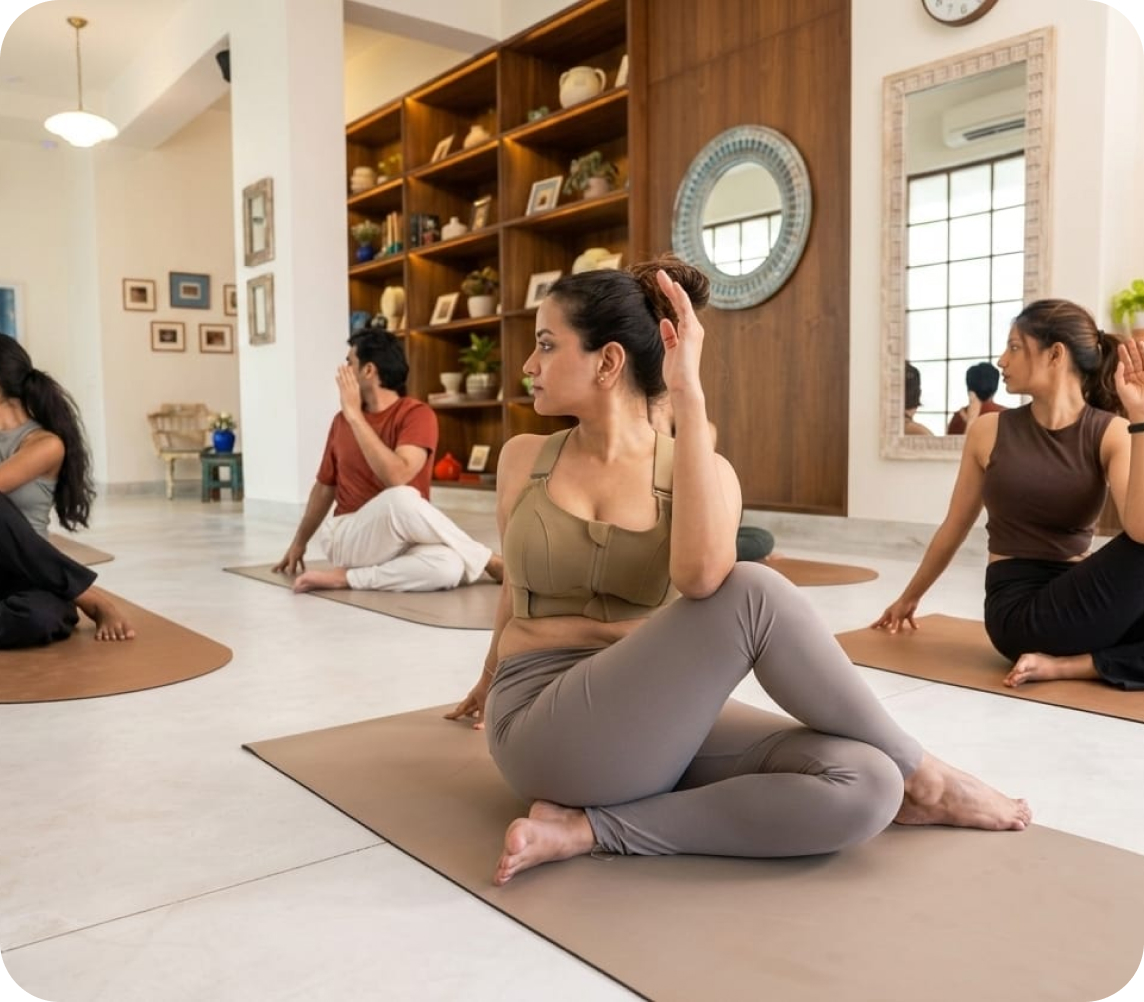
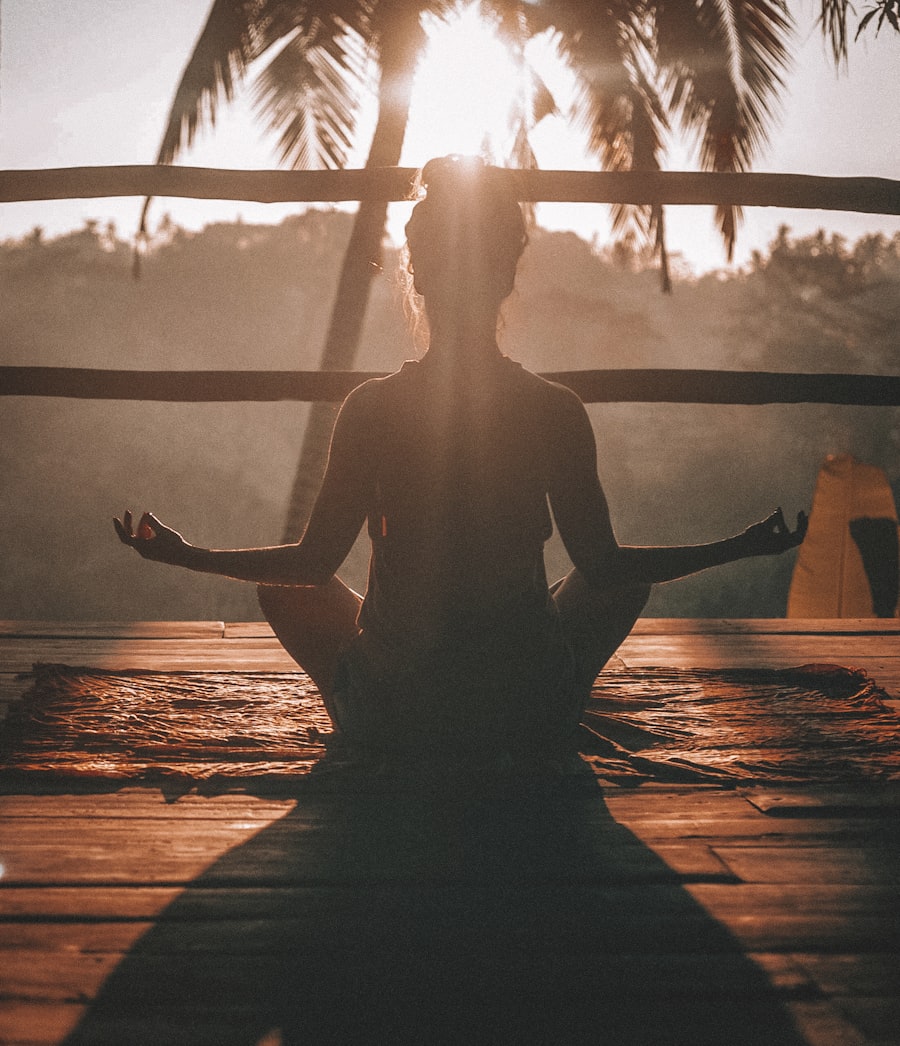
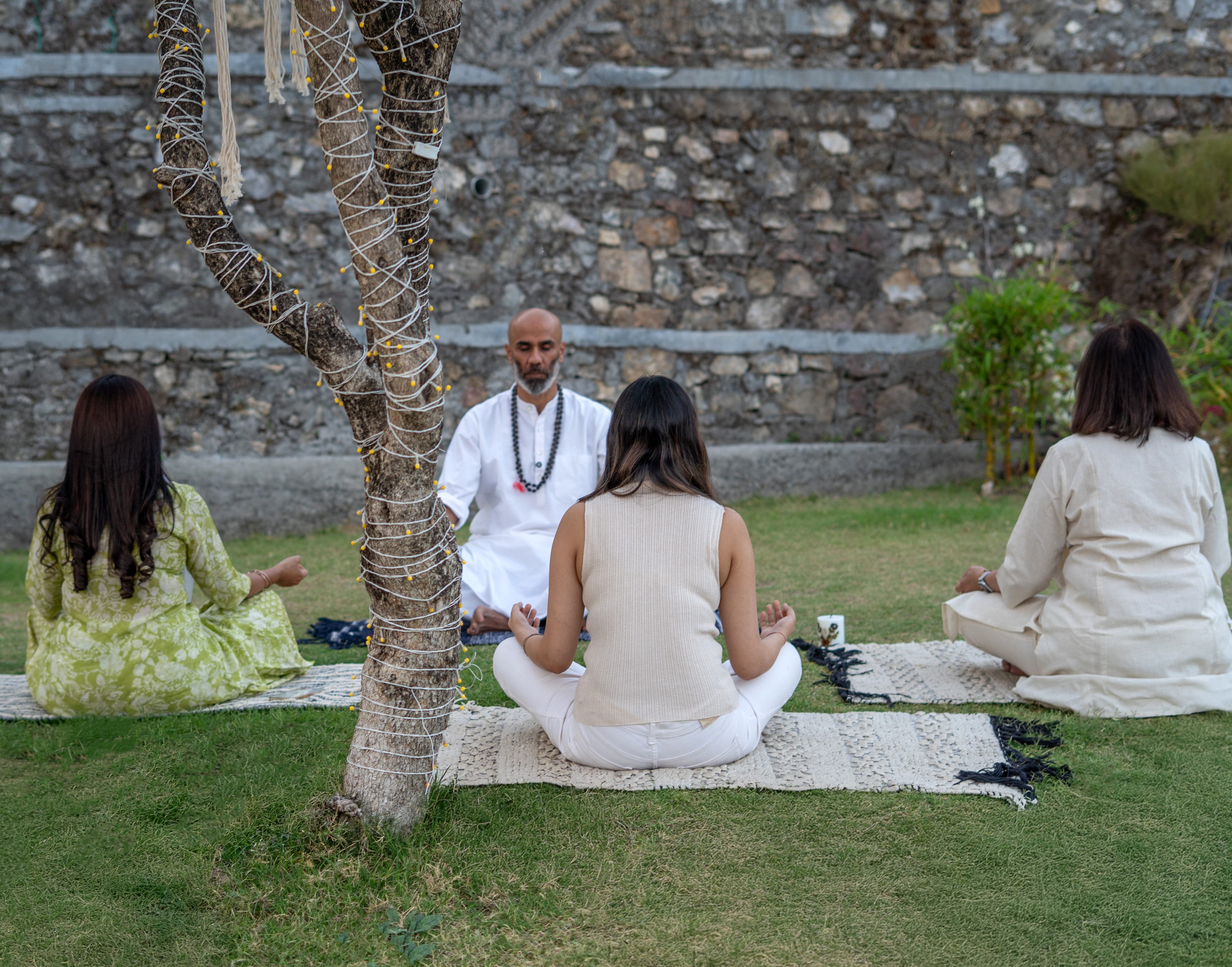
You can meditate seated on a chair or cushion, or lying down, eyes open or closed, for as little as five minutes. In a typical practice you settle the body, bring attention to an anchor such as the breath, and each time you notice the mind has drifted — which it will, constantly — you simply guide it back without judgement. That returning is the practice, not a sign of failure. Guided sessions, where a teacher talks you through it, are an easy starting point. Many people find a short daily rhythm more useful than occasional long sittings.
Who it helps
Almost anyone can take up meditation, and people commonly turn to it for stress, a racing or anxious mind, poor sleep, or simply a wish for more focus and steadiness in daily life. It suits those wanting a low-cost practice they can do independently once they have learned the basics. It is a strong complement to other wellbeing efforts. For significant anxiety, depression or trauma it works best alongside professional support — some people find intensive practice surfaces difficult emotions, so gentle pacing and guidance help.
Finding a style that fits
There is no single 'right' way to meditate. Some people settle most easily with breath-focused mindfulness; others prefer a repeated mantra, a body scan for physical tension, or loving-kindness practice for a warmer, relational focus. Movement-based forms such as walking meditation suit those who find sitting still hard. A teacher can help you sample a few and notice which leaves you feeling steadier — the best practice is ultimately the one you will actually return to.
Common questions
I can't stop my thoughts — am I doing it wrong?
Not at all. Meditation is not about emptying the mind but about noticing when it wanders and gently returning your attention. That returning, again and again, is the whole practice.
How long and how often should I meditate?
Even five to ten minutes most days is valuable, and a short daily rhythm usually helps more than occasional long sessions. You can build up gradually as it becomes comfortable.
Is meditation religious?
It can be, depending on the tradition, but it does not have to be. Many forms are entirely secular and widely taught in clinics, schools and workplaces with no religious content.
Can meditation replace treatment for anxiety or depression?
No. It is a supportive wellbeing practice that works best alongside professional care. If you live with significant anxiety, depression or trauma, gentle pacing and guidance are wise.